
In a rare face off, captains of the auto industry have hit out at the government for not walking the talk. At an industry event in the capital on Wednesday, R C Bhargava, chairman of India's largest carmaker Maruti Suzuki, and Venu Srinivasan, chairman of TVS Motor, questioned the government's intent to support the auto sector. Revenue secretary Tarun Bajaj sat in the audience listening, before his turn came to counter them.

As the Centre pushes reforms in the power sector, especially for the beleaguered electricity distribution segment, several states, especially those ruled by Opposition parties, are clamouring against it. Maharashtra, West Bengal, Tamil Nadu, and Kerela have voiced their reservations against the proposed amendments to the Electricity Act, 2003. The irony is the states opposing the amendments on the ground of threat of privatisation already have private partnerships in power supply. The proposed Bill was slated to be placed on the floor of Parliament in the Monsoon session. But it still awaits Cabinet approval amid several states complaining that they have been not consulted on the issue.

The central government has agreed in-principle to Air India employees' main demands. It fears an industrial dissension now could impede the process of privatisation. It has agreed to bear the cost of liquidation loss on account of transfer to the Employees' Provident Fund Organisation (EPFO) from company-owned trusts, inclusion of employees in the central government health scheme (CGHS), and encashment of leaves. The template of the Air India process will be followed for other public sector undertakings up for privatisation at a later date.

SpiceJet, India's second-largest private airline, kicked off the process of hiving off its logistics business to its subsidiary SpiceXpress as it looks to raise much-needed capital. On Tuesday, the company sought its shareholders' approval to complete the process and to raise up to Rs 2,500 crore via a qualified institutions placement (QIP). It is in talks with multiple private equity investors as it tries to sell shares in the logistics arm to raise money.
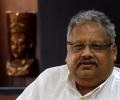
Rakesh Jhunjhunwala-backed new airline Akasa is in talks with US aerospace company Boeing for buying up to 100 737 Max aircraft. Former Jet Airways CEO Vinay Dube and his family members are promoters while ex-IndiGo president Aditya Ghosh is a board member of the airline. The airline is in negotiation with Boeing and has reached out to the government to recertify the aircraft which has been grounded since 2018 after two crashes killing 349 persons, according to sources in the know.

With growing revenues, a spreading business empire, and surging aspirations, companies are seeing a strong demand for luxury products from Tier 2 and Tier 3 cities.
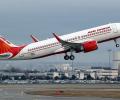
Tata Sons has started the process of due diligence of state-owned Air India and its subsidiary Air India Express. Sources said the group has appointed Bain and Company and Seabury Group for this purpose. Once complete, a financial bid will be submitted and a deal to take over the airline is likely to fructify by end of this year or even earlier, people involved in the process said. Simultaneously, the group has brought in veterans in the aviation business from Delta and United Airlines to prepare a plan for post-merger integration of Air India with its existing airline ventures. Tata Sons operates Vistara - a 51:49 percent joint venture with Singapore Airlines and Air Asia India, in which Tatas hold 83.67 per cent stakes.
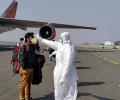
A free and open aviation market, where the government keeps the interest of consumers higher than saving any airline.
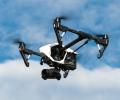
While there were concerns about the security aspect of drones, top government officials were of the view that restricting the drone industry would stifle a sunrise sector which holds significant promise for future, reports Arindam Majumder.

With the threat of a third Covid-19 wave looming large, companies are scrambling to protect employees and keep operations safe--from a no-jab-no-entry-at-workplace policy to ramping up vaccination, it's an all-out effort to prevent the scale of devastation seen in the first two waves. At least two top steel companies--Tata Steel and ArcelorMittal Nippon Steel India (AM/NS India)--are pushing for vaccination certificates for entry into work premises. AM/NS India, a joint venture between world's leading steelmaker, ArcelorMittal, and Japan's Nippon Steel, is set to make vaccination the certificate a requirement from July 1.

A 2019 investigation of Bombay Dyeing by market regulator Sebi has put a brake on the initial public offering process of sister company Go Air. The Wadia group-owned low cost airline had earlier planned to launch the IPO to raise Rs 3,600 crore by August, but may be forced to postpone it by a month or two as Sebi completes its investigation.
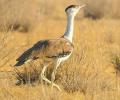
The Great Indian bustard is at the centre of another impending legal tussle. The government is planning to move the Supreme Court seeking a review of its order that asked Gujarat and Rajasthan to lay transmission lines linked to solar power units underground so as to not pose any threat to the endangered bird. The ministry of new and renewable energy (MNRE) has sought a view from the law ministry and will move the court basing its arguments on estimates showing that the bird's population was declining even before solar power plants came to the region, said a senior government official requesting anonymity.
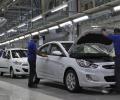
As the second wave of the Covid-19 pandemic abates, India's automakers are hopeful of a quick recovery in sales volumes, led by better rural sentiment, low interest rates, improved availability of finance and a gradual uptick in business and economic activity. In fact, companies have started to ramp up production already, encouraged by high order books and the growing preference for private transport in both rural and urban areas as a means to avoid infections. In early April, the industry had been bullish as the sales trend for March showed that the effects of the Covid-19 pandemic had been left behind. The total vehicle sales had grown by 77 per cent, albeit on a lower base, and for the past few months, sales had consistently touched 300,000 units per month.
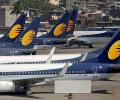
The Kalrock-Jalan consortium - new owners of Jet Airways - has got an assurance from around 30 airports that if the airline restarts operations, 170 pairs of slots can be made available. However, whether those slots will be according to the airline's demand will depend on the order of the insolvency court, which is slated to come next week. Sources said the new management feels it is extremely important that some of those slots are restored or else its business plan of operating Jet as a premium carrier will not be viable.
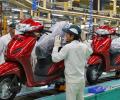
'The fundamentals look strong, but we will have to see if they translate into actual demand.' 'Because the April-May marriage season didn't see much sales due to the lockdown.'

Close to half a dozen more three-row premium mid-size models are expected to hit the road over the next two years.

Analysts remain sceptical on the profitability from freighter business, saying that once normal air transport resumes and there's abundant belly capacity, the traditional economics of air cargo may not be that lucrative.

However, the tender criteria demands that an entity must be eligible to conduct Beyond Visual Line of Sight operations in order to become eligible. Currently, no drone companies are eligible to do BVLOS operations, reports Arindam Majumder.

Energy's exit is a cautionary tale for several foreign investors in India as close to 16 Gw of solar and wind power projects languish without any power purchase agreement, 24 Gw without transmission connectivity and around 2 Gw unilaterally cancelled by project developers.
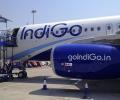
IndiGo, India's largest airline, is in talks to raise fresh funds as a second wave of pandemic has led to collapse in travel demand. The airline may look to raise Rs 3,500-4,000 crore. On Monday, only 97,761 passengers flew. With flyers cancelling bookings, airlines had to put aside flights and operated only 1,306 of them.
 © 2026 Rediff.com - Investor Information - Advertise with us - Disclaimer - Privacy Policy - Sitemap - Feedback - About us - Terms of use - Grievances